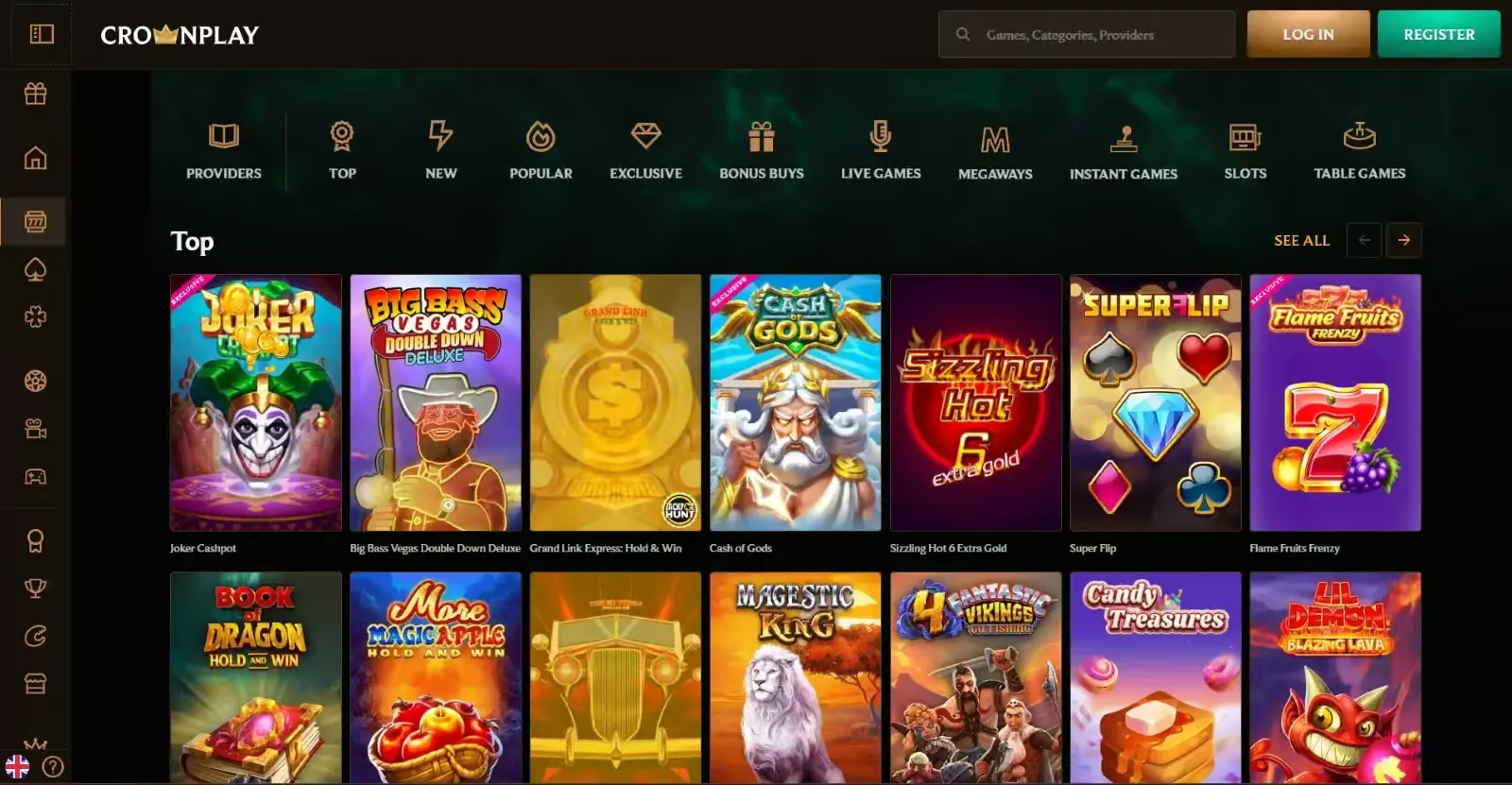

- Slots at CrownPlay Casino: What Actually Makes a Good Spin
- Why Slots Took Over Canadian Online Casinos
- The Real Differences Between Slot Types
- Reading Volatility Correctly
- RTP: What the Number Means and What It Doesn’t
- A Quick Word on Hit Frequency
- Providers Worth Knowing by Name
- Choosing a Slot That Fits Your Session, Not Someone Else’s
- Slots on Mobile: What’s Actually Different
- What’s New and Why It’s Worth Checking Regularly
- Bonus Buy Features: What They Are and What to Know
- Keeping Slot Play Actually Fun
Slots at CrownPlay Casino: What Actually Makes a Good Spin
Open any online casino lobby and slots are what fill most of the screen, and there’s a reason for that beyond simple popularity. A slot machine is one of the few casino products that rewards curiosity. You can learn a table game’s rules in five minutes and then spend years refining strategy, but a slot gives you something different: dozens of small mechanical decisions hidden behind a spinning reel, and understanding even a few of them changes how you play. This page isn’t a sales pitch for our lobby. It’s a rundown of how slots actually work, what separates a good session from a frustrating one, and how to pick titles that match what you’re actually looking for, whether that’s a quiet twenty minutes on your phone or a serious jackpot hunt.
Why Slots Took Over Canadian Online Casinos
Table games ask something of you. Blackjack wants basic strategy memorized, poker wants you reading opponents, roulette wants nerve. Slots ask nothing except a decision on bet size. That’s not a knock against them, it’s exactly why they’ve become the default entry point for most players, especially anyone who wants to unwind rather than compete.
The other shift worth mentioning is production quality. Ten years ago a slot bonus round meant a static screen and a few extra spins. Now developers build actual mini games into bonus rounds, layer in cinematic transitions, and score soundtracks that build tension the closer you get to a trigger. Big Time Gaming’s Megaways engine alone reshaped how reels function, and providers like Hacksaw Gaming or Nolimit City have pushed volatility and bonus buy features into territory that barely resembles the fruit machines this genre started from.
The Real Differences Between Slot Types
Lumping every slot into one category is where a lot of players go wrong, because the mechanics genuinely change how a game should be approached.
Classic slots run on three reels with a single payline or a handful of them, using symbols like bars, bells, and sevens. They’re fast, cheap to play round after round, and mathematically simple, which makes them a reasonable starting point if you find modern video slots overwhelming.
Video slots are the default now, usually five reels with anywhere from ten to a few hundred fixed paylines. This is where theme and bonus design carry the most weight: free spin rounds, expanding wilds, sticky multipliers, and pick and click features all live here.
Megaways and cluster pays titles ditch fixed paylines entirely. Megaways varies the number of symbols on each reel every spin, sometimes generating over a hundred thousand ways to win, while cluster pays reward groups of matching symbols touching each other rather than lining up left to right. Both tend to run higher volatility than standard paylines slots.
Hold and win slots, popularized by titles built around collecting coin symbols, lock a set of reels and award respins whenever a new coin symbol lands, often building toward a fixed jackpot tier if the grid fills completely.
Progressive jackpot slots contribute a slice of every wager placed across a linked network into a shared prize pool. Some networks are local to a single provider’s catalogue, others span multiple casinos and currencies, which is how jackpots occasionally reach into the millions.
Reading Volatility Correctly
Volatility gets mentioned constantly and understood rarely. It has nothing to do with how much a slot pays back overall. It describes the shape of that payback: how often you win, and how big those wins tend to be relative to your stake.
| Volatility | How Often You Win | Size of Typical Wins | Who It Suits |
|---|---|---|---|
| Low | Often, sometimes every few spins | Small, usually under 5x your stake | Players stretching a bankroll over a long session |
| Medium | Moderate, some dry spells | Mid range, roughly 5x to 50x stake | Most players wanting a balance of action and payout |
| High | Rare, can go many spins without a win | Large, sometimes 100x stake or more | Players comfortable with losing streaks in exchange for bigger ceilings |
A practical way to test this yourself: play any new slot at a small stake for thirty or forty spins before deciding whether to raise your bet. If you’re seeing frequent small hits, that’s low to medium volatility behaviour. If the reels stay quiet for long stretches, you’re likely dealing with something higher variance, and betting big early is a good way to burn through a bankroll before the game’s actual payout structure gets a chance to show up.
RTP: What the Number Means and What It Doesn’t
Return to Player is expressed as a percentage and represents the average amount a slot pays back over its full mathematical cycle, which typically means millions of simulated spins, not the twenty rounds you played on a Tuesday night. A game listed at 96.2% RTP is designed so that, over that enormous sample size, 96.2% of everything wagered gets returned to players collectively. The other 3.8% is the house edge.
Here’s where people misread it: RTP says nothing about any individual session. You can lose your entire deposit on a 97% RTP slot in ten minutes, or triple your money on a 92% RTP game in the same span. It’s a long run statistic, useful for comparing games against each other, useless as a prediction for what happens in the next hour.
What actually matters more day to day is combining RTP with volatility. Two slots can both sit at 96% RTP and feel completely different to play, one paying constantly in small amounts, the other paying rarely but heavily. Before loading any funds, check the game info panel, it takes a few seconds and every properly licensed slot displays this figure.
A Quick Word on Hit Frequency
Alongside RTP and volatility, some paytables also list hit frequency, the percentage of spins that result in any win at all, even a small one. A slot with 25% hit frequency will land some kind of payout roughly once every four spins on average. This number doesn’t tell you about win size, but paired with volatility it gives a fuller picture of what a session will actually feel like to sit through.
Providers Worth Knowing by Name
The studio behind a slot shapes its personality almost as much as its theme does. Recognizing a few names makes browsing a lobby far less random.
| Provider | Reputation | Where They Shine |
|---|---|---|
| Pragmatic Play | Massive output, consistent release schedule | Adventure themes, tournament friendly titles |
| NetEnt | Polished visuals, long running franchises | Branded slots, mythology inspired games |
| Play’n GO | Strong narrative bonus rounds | Norse and historical settings |
| Big Time Gaming | Created the Megaways mechanic | High ceiling, high volatility play |
| Nolimit City | Aggressive, experimental math models | Extreme volatility, feature dense bonus rounds |
| Red Tiger | Daily jackpot networks | Fast paced, jackpot chasing sessions |
Trying two or three titles from different studios before settling into a favourite is one of the fastest ways to figure out which design philosophy actually suits how you like to play.
Choosing a Slot That Fits Your Session, Not Someone Else’s
Most disappointing sessions come down to mismatched expectations rather than bad luck. Here’s a sequence that actually helps.
- Decide what you’re playing for before opening a single game. Quick entertainment, a shot at a jackpot, and a long relaxed session all call for different volatility levels.
- Check RTP first, then volatility, then hit frequency if it’s listed. Together these three numbers predict the shape of your session far better than the theme or graphics do.
- Run the free demo if one exists. Ten minutes of demo play tells you more about pacing and bonus frequency than any review could.
- Set your budget before your first real money spin, not after a losing streak convinces you to chase it back.
- Read the paytable for bonus triggers specifically. Knowing whether free spins trigger from three, four, or five scatter symbols changes how you should size your bets.
- Step away on a schedule rather than waiting for a natural stopping point, since slots are built to make natural stopping points hard to find.
Slots on Mobile: What’s Actually Different
Playing on a phone isn’t a scaled down version of the desktop experience anymore, at least not on a properly built platform. CrownPlay’s slot catalogue runs through the mobile browser without requiring an app download, and the difference between a well optimized mobile slot and a poorly ported one shows up fast: load times, touch accuracy on smaller buttons, and how gracefully autoplay and quick spin settings tuck into a compact interface.
A few things worth checking on your own device before committing to a longer mobile session:
- Games should load within a few seconds even on average mobile data, not just Wi-Fi
- Buttons for spin, bet adjustment, and autoplay should be spaced enough to avoid mis-taps
- Sound and animation settings should be adjustable, since battery drain matters more on longer sessions
- Your balance and play history should sync instantly if you switch from phone to desktop mid session
- Portrait and landscape orientation should both render cleanly, not just one or the other
What’s New and Why It’s Worth Checking Regularly
Slot libraries aren’t static catalogues, they’re closer to living inventories. Providers push new releases every week, and certain stretches of the year, particularly around Halloween and the December holidays, bring a wave of seasonal titles built around those themes specifically. Checking a lobby’s newest additions section every so often is worth the habit if you enjoy trying games before they’ve built a reputation, since early adopters sometimes catch limited time promotions tied to a fresh release.
Bonus Buy Features: What They Are and What to Know
A growing number of slots, particularly from providers like Pragmatic Play and Hacksaw Gaming, let players pay a flat multiple of their stake to skip straight into the bonus round rather than spinning toward it naturally. This feature isn’t available or legal in every jurisdiction, and where it is offered, it changes the math of the game entirely: you’re paying a premium for guaranteed bonus access, and the game’s RTP is usually split between two figures, one for base game spins and a separate, often different, figure for bonus buy rounds. If a slot offers this feature, the paytable will list both numbers, and it’s worth reading both before deciding whether the premium is worth paying.
Keeping Slot Play Actually Fun
None of the mechanics above matter if a session stops feeling like entertainment. Slots are built with variable reward schedules specifically because unpredictability keeps things engaging, and that same design that makes them fun can make them hard to walk away from if limits aren’t set ahead of time. Deposit limits, session reminders, and cooling off periods are available through account settings and take less than a minute to configure. If gambling starts feeling like an obligation rather than something you’re choosing to do, provincial support services across Canada are there specifically for that, and reaching out early is far more useful than waiting until it feels unmanageable.
Slots will always involve chance, that’s the entire point of them. But knowing how volatility shapes a session, what RTP can and can’t tell you, and how to match a game’s design to your own mood and bankroll turns random spinning into something closer to an informed hobby. That won’t guarantee a win on any given night, but it’ll make the time spent chasing one a lot more worthwhile.

Bonus Roundup October 2026